
WHITE PAPER:
The Business Case for Integrating Menopause Education into Medical School Curricula
WHITE PAPER:
Menopause affects half the population…
Yet most physicians receive little or no training on how to recognise and manage it. The cost is measured in poorer care, avoidable spending, and lost economic output.

Meet the authors behind the research
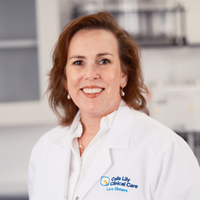
Dr Lara Zibners, MD MMEd MBA
Dr. Lara Zibners holds an MD with honors from The Ohio State University College of Medicine, an MMEd from the University of Dundee, and an MBA from the UNC Kenan-Flagler Business School. She serves as the national educator for trauma training at the Royal College of Surgeons of England. She is also a published author and has appeared on television programs such as The Rachael Ray Show, as well as in publications including Parenting and Forbes magazine.
Lara co-founded Calla Lily Clinical Care based on her experience of multiple failed IVF cycles, which involved hundreds of painful intramuscular injections, as well as leaky pessaries and suppositories. With a broad background in clinical medicine and medical education across both the US and the UK, she brings a unique understanding of the scientific, operational, and business challenges facing women's healthcare.

Dr Adam Brown, MD MBA
Dr. Adam Brown is a physician executive, healthcare strategist, and business professor who is board-certified in both Lifestyle Medicine and Emergency Medicine. He is the founder and managing partner of ABIG Health, a Washington, D.C.-based advisory firm that helps health systems, digital health and MedTech companies, and investors navigate strategy, commercialization, and market entry across the U.S. healthcare system.
Before launching ABIG in 2022, he served as President of Emergency Medicine and Chief Impact Officer at Envision Healthcare, where he oversaw an approximately $2 billion service line and led national clinical engagement strategies. A Professor of Practice at the University of North Carolina at Chapel Hill, he also teaches healthcare operations and strategy at ESCP Business School in London and Paris. As a columnist for MedPage Today and a frequent contributor to national and international media, Brown is a widely recognized voice on the state of the U.S. healthcare system. His combined training in Emergency Medicine and Lifestyle Medicine gives him a distinctive perspective that connects frontline care, prevention, and the business of healthcare.
Meet the contributors behind the research
-
Senior Editor & Contributor
-
Senior Editor
-
Contributor
The Ohio State University College of Medicine, Class of 2028
-
Associate Professor of Orthopedic Surgery, Duke University School of Medicine
-
Contributor
Endowed Director, Soter Women's Health Research Program; Associate Professor of Psychiatry & Behavioral Health, Neuroscience, Obstetrics & Gynecology; Associate Director, Medical Scientist Training Program, The Ohio State University College of Medicine
-
Contributor
Yale IRB; former Bayer CDO; Health of Women Investor Summit
-
Contributor
CEO, Perry & Perry Academy
-
President, Opus Strategy
-
Contributor
Opus Strategy
What you’ll learn
01.
Why menopause education belongs across every medical specialty:
Menopause affects multiple organ systems and regularly appears in primary care, cardiology, orthopaedics, neurology, urology, psychiatry, and beyond—not only obstetrics and gynaecology.
02.
How gaps in medical training increase healthcare costs:
Limited knowledge can lead to missed diagnoses, unnecessary testing, inappropriate prescribing, fragmented care, and delayed treatment.
03.
The economic case for earlier, universal education
Better-trained physicians can identify symptoms sooner, improve prevention, reduce complications, and limit avoidable healthcare expenditure.
04.
Why curriculum reform is a low-cost, high-impact investment
Menopause education can be integrated into existing coursework without adding significantly to student workloads or requiring a standalone programme.
Key Statistics:
6.8%
of surveyed physicians in family medicine, internal medicine, and OBGYN felt prepared to treat menopause after residency.
$25B
in estimated annual direct medical expenses linked to menopause symptoms among U.S. women aged 45–60.
30%
of the U.S. workforce is estimated to be made up of women transitioning through menopause.
Why This Matters
Menopause is not a niche women’s health issue. It influences cardiovascular health, bone density, cognition, mental health, metabolic risk, musculoskeletal function, and long-term workforce participation.
Yet medical education often treats it as peripheral. This gap leaves clinicians underprepared, women underserved, and health systems absorbing costs that earlier recognition and better management could help prevent.
“The lack of inclusion of a topic in medical school sends a clear signal to students: it doesn’t matter.”
Closing the Menopause Knowledge Gap
Download our latest white paper to explore the evidence, challenges, and opportunities shaping menopause care.